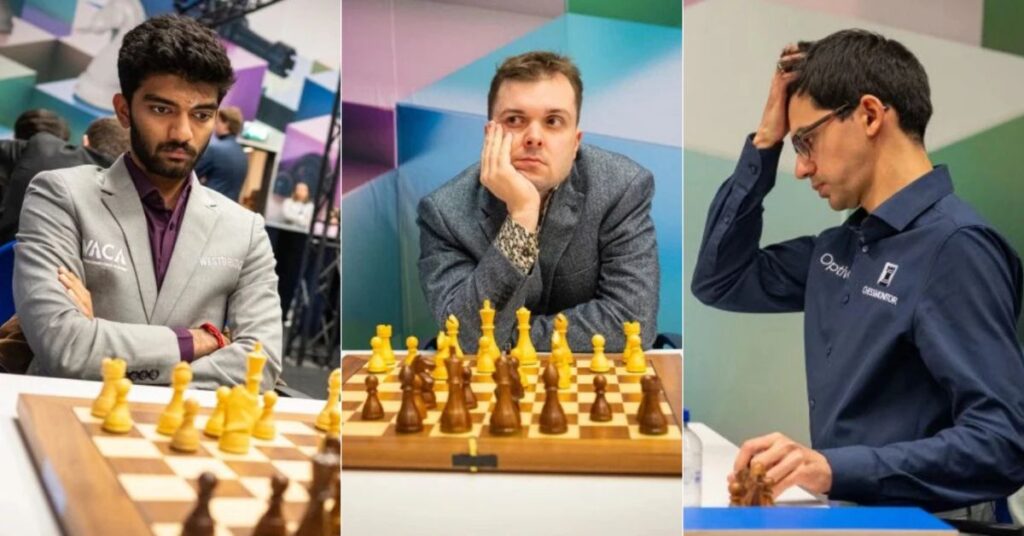

The Tata Steel Chess Tournament, often referred to as the “Wimbledon of Chess,” has long been regarded as one of the most prestigious and demanding events in the global chess calendar. Year after year, it brings together the world’s best grandmasters—World Champions, elite contenders, rising prodigies, and seasoned veterans. Yet, in recent editions of the tournament, one trend has sparked widespread discussion among fans, analysts, and players alike: elite players making an unusually high number of blunders.
At a level where accuracy is expected to be near perfect, seeing top-ranked players miss basic tactics, hang pieces, or miscalculate seemingly simple variations has left many asking the same question—why is this happening at Tata Steel?
Is it fatigue? Pressure? Over-preparation? Psychological stress? Or has modern chess itself become too complex even for the very best?
This in-depth blog explores all the key reasons behind the rise in blunders at the Tata Steel Chess Tournament, offering a clear, balanced, and easy-to-understand explanation for chess fans of all levels.
The Unique Pressure of the Tata Steel Chess Tournament
One of the first and most important factors to understand is the immense pressure associated with Tata Steel.
Unlike many other elite tournaments, Tata Steel:
- Runs for nearly two full weeks
- Uses classical time controls
- Features no easy opponents
- Is followed intensely by global media and fans
Every game matters. A single loss can derail title hopes, while a single win can catapult a player into contention. This constant pressure builds round after round, and even elite players are not immune to its effects.
Psychological stress directly impacts calculation accuracy. Under pressure, players may:
- Rush decisions
- Avoid safe continuations
- Overthink simple positions
- Miss obvious tactical threats
At the elite level, even a momentary lapse in focus can result in a costly blunder.
Extreme Fatigue Due to Long Classical Games
Modern elite chess is physically and mentally exhausting, and Tata Steel is especially demanding in this regard.
Why fatigue matters:
- Classical games often last 4 to 6 hours
- Players must maintain peak concentration throughout
- Recovery time between rounds is limited
- Preparation work continues late into the night
By the middle and later rounds, accumulated fatigue begins to show. Mental exhaustion reduces a player’s ability to calculate deeply, increasing the likelihood of mistakes.
Even elite grandmasters, despite excellent physical conditioning, are human. When fatigue sets in:
- Tactical vision weakens
- Calculation depth reduces
- Simple checks or captures can be overlooked
Many blunders at Tata Steel occur not in wild positions, but in relatively quiet moments, when tired players relax their vigilance for just one move.
Increasing Complexity of Modern Chess Positions
Modern elite chess is far more complex than it was even 15–20 years ago.
Thanks to:
- Advanced engine preparation
- Deeper opening theory
- Highly optimized middlegame ideas
Players are often pushed into extremely sharp and unbalanced positions very early in the game.
Why complexity leads to blunders:
- Positions have multiple tactical resources
- One inaccurate move can collapse the position
- Defending is often harder than attacking
- Opponents constantly set subtle traps
In earlier eras, elite games were more strategic and positional. Today, even quiet-looking positions can hide tactical landmines. A player may believe the position is under control, only to miss a single tactical shot that changes everything.
At Tata Steel, where every opponent is capable of generating such complications, blunders become more likely.
Heavy Reliance on Computer Preparation
One of the most debated topics in modern chess is over-reliance on engines.
Elite players today prepare openings with deep computer analysis, memorizing long variations that extend well into the middlegame. While this has raised the overall quality of play, it has also introduced new risks.
The downside of engine-heavy preparation:
- Players may understand moves but not ideas
- Memorized lines can fail if opponent deviates
- Overconfidence in preparation can reduce alertness
- Human intuition may be underdeveloped
When a player is forced out of preparation early, they must rely on over-the-board calculation and intuition. In high-pressure environments like Tata Steel, this transition is not always smooth.
As a result, players may:
- Misjudge unfamiliar positions
- Miss simple tactical resources
- Make uncharacteristic blunders
This is not a sign of weakness, but a reflection of how modern chess training has evolved.
Time Trouble Remains a Major Factor
Even at the highest level, time pressure continues to cause blunders.
At Tata Steel:
- Games are played with strict time controls
- Players often spend large amounts of time early
- Complex positions demand deep calculation
As the clock ticks down, players may have only seconds to make crucial decisions. Under such conditions:
- Calculation becomes superficial
- Moves are played on instinct
- Simple checks or captures are missed
Many high-profile blunders at Tata Steel occur when players are low on time, especially before the first time control.
Time trouble has always been part of chess, but in today’s ultra-complex positions, its impact is magnified.
Psychological Impact of a Single Mistake
Chess is a mental battle as much as a technical one. At Tata Steel, one blunder can trigger a psychological spiral.
After making a mistake:
- Confidence drops
- Fear of further errors increases
- Players begin second-guessing themselves
- Decision-making becomes hesitant
This mental instability can lead to additional mistakes, even in otherwise manageable positions.
For young players especially, the pressure of playing against legends, combined with global attention, can be overwhelming. But even experienced champions are not immune to this psychological effect.
Once self-doubt creeps in, blunders become more likely.
Stronger and Deeper Competition Than Ever Before
The depth of elite chess has increased dramatically.
At Tata Steel:
- Almost every participant is 2700+ rated
- Young prodigies play fearlessly
- Preparation is extremely deep across the field
There are no “rest days” or easy opponents. Every round demands full concentration.
This depth means:
- Opponents constantly pose problems
- Even small inaccuracies are punished immediately
- Players are under relentless pressure
In earlier eras, top players could recover from small mistakes. Today, even a slight error can become a decisive blunder because opponents are so well-prepared and tactically alert.
Younger Players Taking More Risks
Another reason blunders stand out at Tata Steel is the fearless approach of younger players.
Young grandmasters often:
- Play aggressive openings
- Take calculated risks
- Avoid early draws
- Push for wins in unclear positions
While this style makes games exciting, it also increases volatility. When both players push hard for a result, the chances of mistakes naturally rise.
Elite veterans are often forced out of their comfort zones, leading to unfamiliar positions where blunders can occur.
Media, Social Media, and Engine Analysis Amplify Errors
Blunders have always existed in elite chess—but today, they are more visible than ever.
Every Tata Steel game is:
- Live-streamed
- Instantly analyzed by engines
- Discussed on social media within minutes
A mistake that might have gone unnoticed decades ago is now:
- Highlighted with engine evaluations
- Turned into viral clips
- Analyzed move by move
This creates the impression that blunders are increasing, even if the actual frequency is not drastically higher.
Modern coverage magnifies every error.
Human Limits in an Inhumanly Precise Game
Perhaps the most important reason of all is this: chess at the elite level has reached near-human limits.
Engines play almost flawlessly. Humans do not.
Elite players are expected to:
- Match engine-level precision
- Calculate for hours
- Handle constant pressure
- Avoid mistakes entirely
This expectation is unrealistic. Blunders are not signs of decline—they are signs of human limitation in an increasingly perfect game.
At Tata Steel, where the standard is extremely high, even minor inaccuracies look like major blunders.
Why Tata Steel Specifically Sees These Blunders
To summarize, Tata Steel is a perfect storm:
- Long duration
- Strong field
- High pressure
- Deep preparation
- Intense media focus
All these factors combine to make blunders more visible and more frequent than in many other tournaments.
What These Blunders Mean for the Future of Chess
Rather than being a negative sign, these blunders actually:
- Make chess more relatable
- Increase excitement for fans
- Show the human side of elite players
- Prove that creativity still matters
They remind us that chess is not just about perfection, but about struggle, decision-making, and resilience.
Final Thoughts
Elite players making blunders at the Tata Steel Chess Tournament is not a mystery—it is the natural outcome of modern chess’s complexity, pressure, and evolution.
Fatigue, psychological stress, engine-heavy preparation, time trouble, and fierce competition all play a role. These mistakes do not diminish the greatness of elite players. Instead, they highlight just how difficult top-level chess has become.
Tata Steel remains one of the most challenging tournaments in the world—and that challenge is exactly what makes it so special.
As long as chess continues to evolve, blunders will remain part of the game—even at the very top.